

en
en

BNXT — Building Privacy-First Fintech

BNXT

/

Fintech / Privacy

/

Web3 / Smart ContractsAccount AbstractionConsulting
BNXT — Building Privacy-First Fintech

Industry

Fintech / Privacy

Scope

Smart contracts, account abstraction architecture, integration guidance, technical consulting

Role

Technology consultant and smart contract developer

Scale

Contracts audited · App in pre-production stage · Internal and external testing ongoing
BNXT — Building Privacy-First Fintech

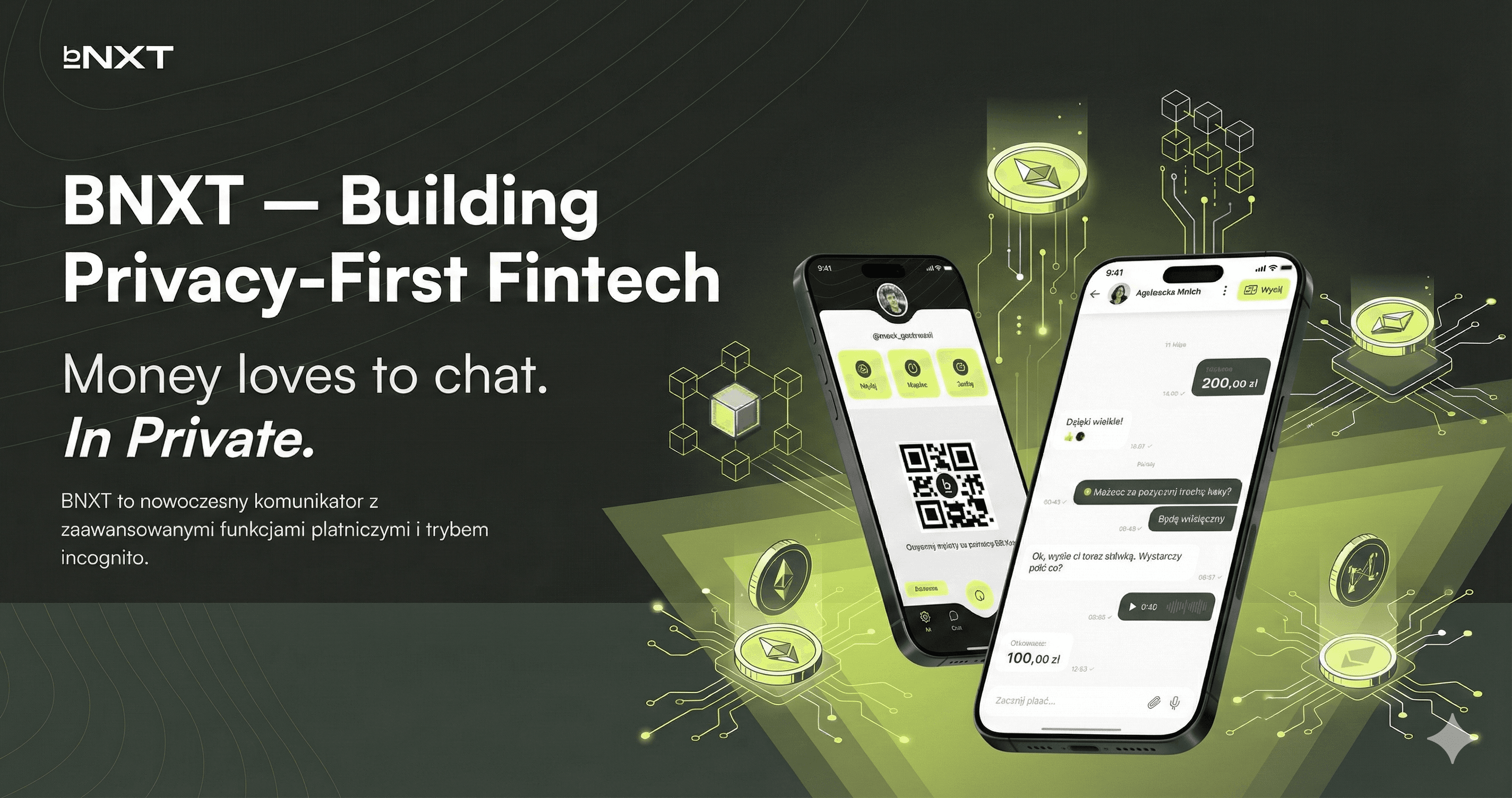
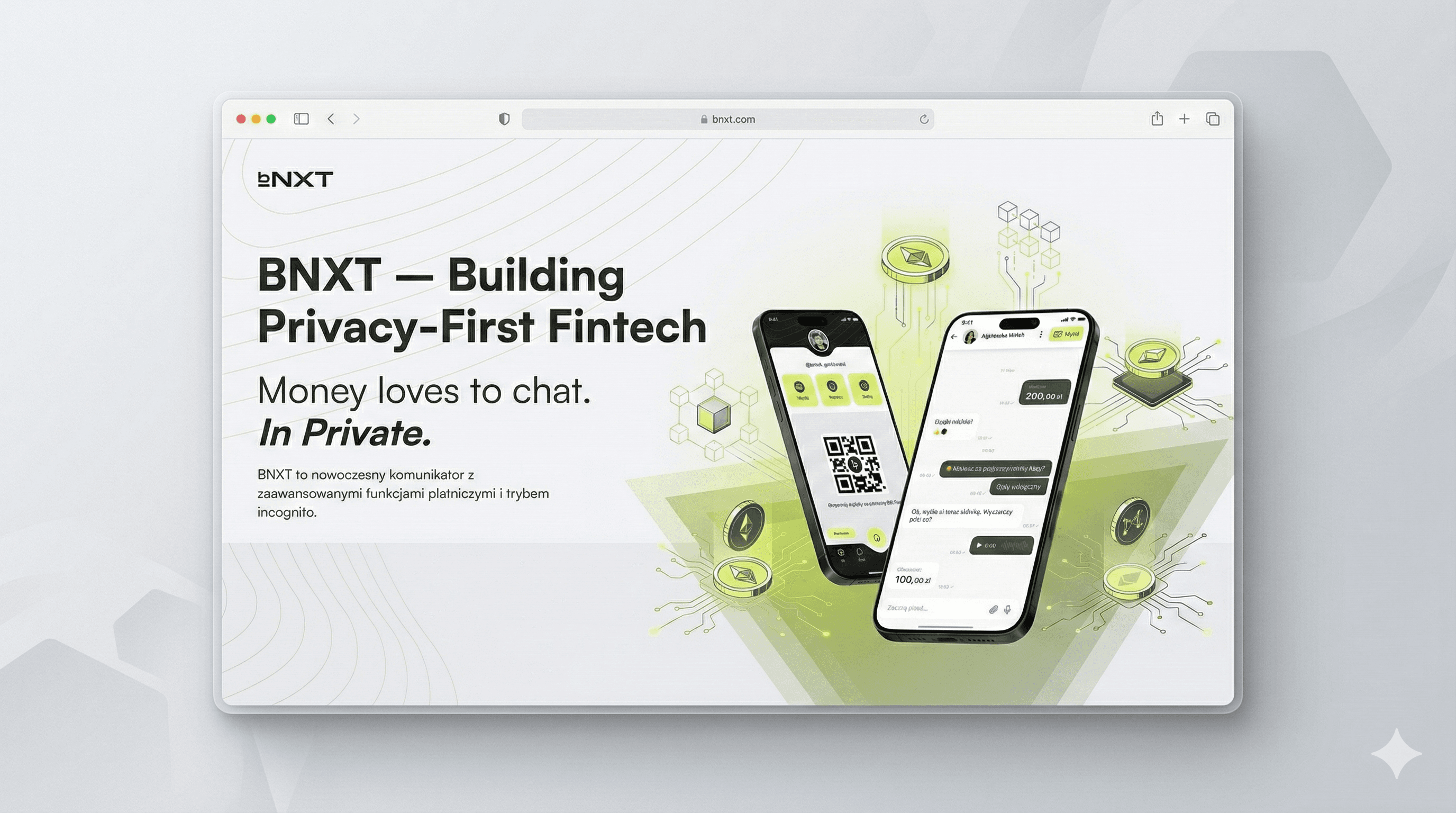
BNXT is a Polish fintech startup creating a mobile app that combines messaging with blockchain payments. Users can send small amounts instantly — like tips in a chat — while keeping their transactions private. We joined in 2024 as technology consultants and smart contract developers.

The Challenge

BNXT had a clear product vision but lacked blockchain expertise. They were building something complex: a chat app where every message could carry a payment, with wallets that don't require users to understand crypto.

Without proper guidance, they risked security gaps, extended timelines, and technical debt that would haunt them later. In fintech, especially with blockchain, mistakes aren't just bugs — they're risks to user funds.

What We Delivered

Smart contracts: We designed and built the token contracts that power BNXT's payment system, using established security patterns and thorough testing.

Account abstraction architecture: We implemented a system (ERC-4337 with Biconomy) that lets users send tokens without managing gas fees or understanding blockchain mechanics. From their perspective, it just works.

Payment gateway integration: We specified how the app connects to Ari10 for converting between traditional currency and crypto.

Architecture guidance: While external teams built the mobile app and backend, we provided the blueprints — integration patterns, security requirements, and code review checkpoints.

How We Built It

Our role was consultant and builder. We wrote the smart contracts ourselves, then guided external teams on how to integrate them properly.

Security was the priority. We conducted threat modeling for common attack patterns, handled edge cases in token transfers, and ensured comprehensive testing with 40 internal and external testers.

The contracts passed an external security audit by Composable Security in March 2025. Internal penetration testing by experienced QA validated the broader system.

Key Decisions

Consulting model: Guiding external teams without controlling their codebase required clear documentation and regular validation checkpoints. Teaching takes longer but builds client capability.

Account abstraction trade-off: More abstraction means better user experience but a larger attack surface. We chose security-first design with thorough testing of the abstraction layer.

Knowledge sharing: We documented everything transparently, even when it meant teaching skills that could reduce future dependency on us. Building trust mattered more than locking in work.

Results

  • Smart contracts passed external security audit (Composable Security, March 2025)
  • Internal penetration testing completed
  • Account abstraction architecture implemented and tested
  • 40 testers validated the system
  • Application in pre-production with ongoing testing

What's Next

  • Production launch preparation
  • User onboarding and growth strategy
  • Performance optimization based on real usage patterns
BNXT Dashboard - Communication and Payment Platform
Key takeaways

01 / Architecture Before Code

Proper architecture and best practices at the start save time and risk later.

02 / Mentoring as Value

Sharing knowledge and know-how with other teams builds stronger foundations than just writing code.

03 / Security From Day One

In fintech with blockchain, edge cases and attack vectors must be considered from the start, not patched later.

04 / Transparency Builds Trust

Clear approach to consulting and transparent knowledge sharing builds trust and better outcomes.

Thinking about tokenizing a real business? Let's talk before the problems start.